
ING Bank Austria
Building a UX team. Bringing new banking experiences to life.
Bringing UX in-house.
As ING Austria moved design in-house, I led UX and UI across housing loans, mobile banking and referrals. The work combined launching and improving customer experiences with establishing the team and ways of working behind them.
I established the UX chapter and grew the team to two designers. Alongside hands-on product design, I advised agile teams, planned projects and supported junior designers.
70%increase in onboarding completion
For new customer sign-ups.
My contribution
- Led UX and UI for key retail banking products and feature launches.
- Established the UX chapter, onboarding and supporting junior designers.
- Connected concepts to implementation through workshops, documentation and prototypes for user tests.
Making home financing clearer.
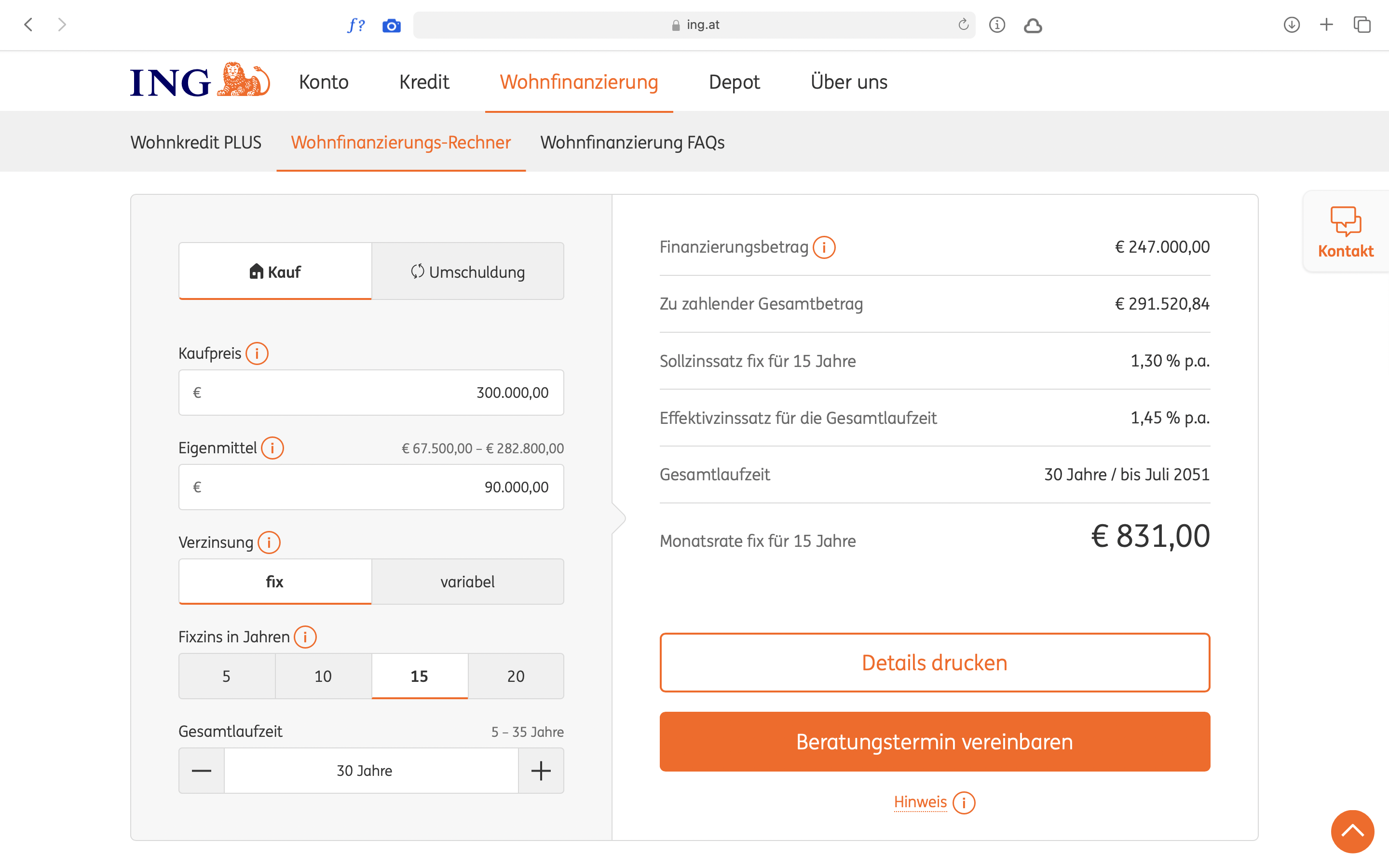
A housing loan brings several decisions together: the purchase price, available equity, interest type and repayment term. The calculator places those inputs beside a breakdown of financing costs and the monthly payment, making the relationship between choices and costs visible in one view.
From a first choice to a consultation.
The journey starts with a clear choice between purchasing a property and refinancing. Customers can explore a financing scenario, review the details and continue to a consultation. The design intent was to make a complex financial decision easier to understand.
From an invitation to a personal referral.
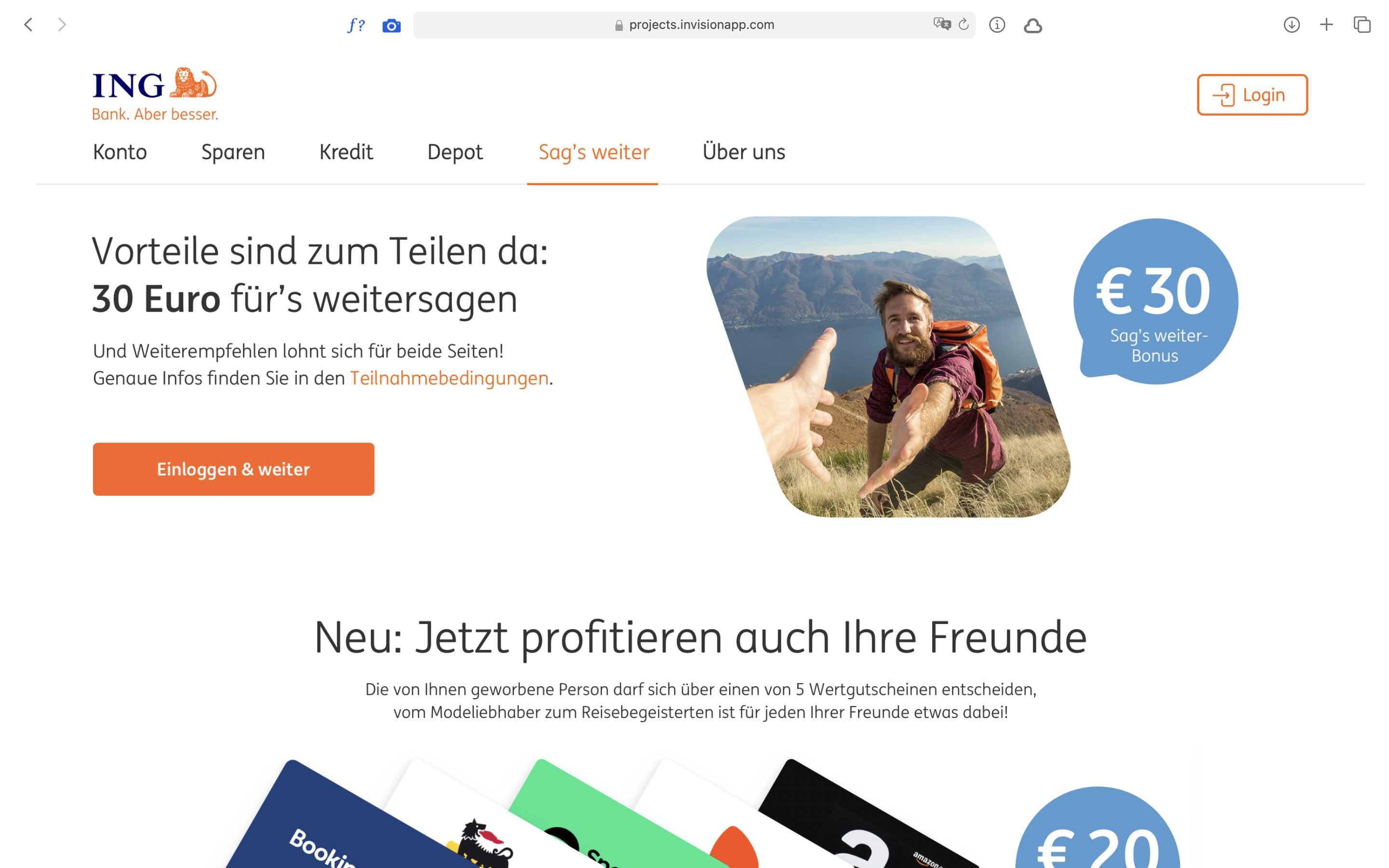
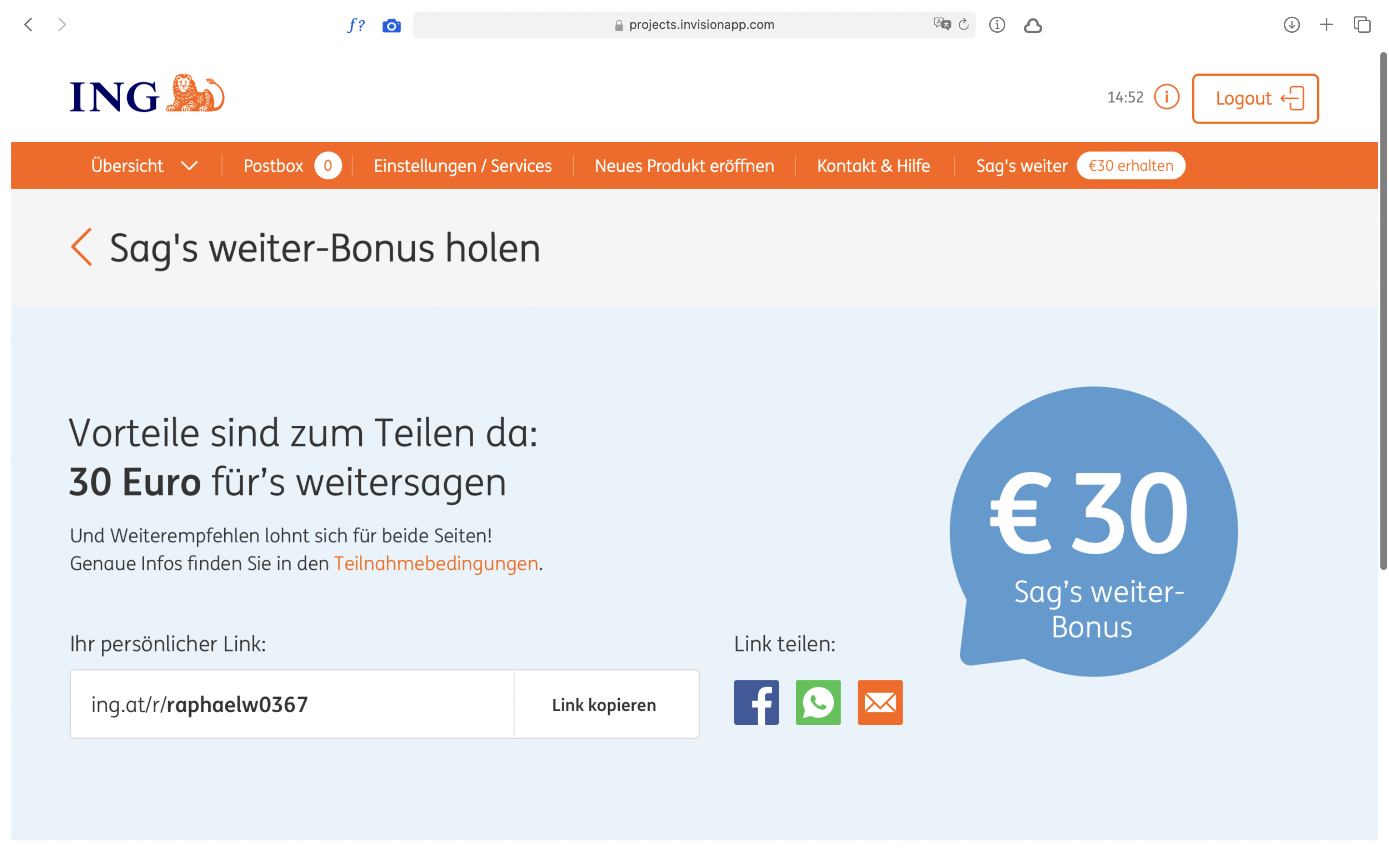
The referral journey connects a public landing page with a signed-in sharing experience. The landing page introduces the incentive and links to participation conditions; the account view gives customers a personal referral link, a copy action and familiar sharing options.
These two views address different needs: understanding the offer, then acting on it. Keeping the next step clear was central to the design.
Building the UX practice.
Establishing the UX chapter meant supporting the people doing the work as well as shaping the product. I introduced junior designers to the team and supported their development, while remaining involved in concepts, prototypes and interface implementation.
Creating prototypes for user tests was part of that practice: turning concepts into something concrete that could be evaluated before implementation.
Keeping design and delivery connected.
I advised agile teams on UX, planned and ran internal workshops, and developed concepts and documentation. My responsibilities also included project planning and management, connecting design work with the wider delivery process.
With an external development team involved, clear concepts and documentation were especially important for communicating design decisions through implementation.